

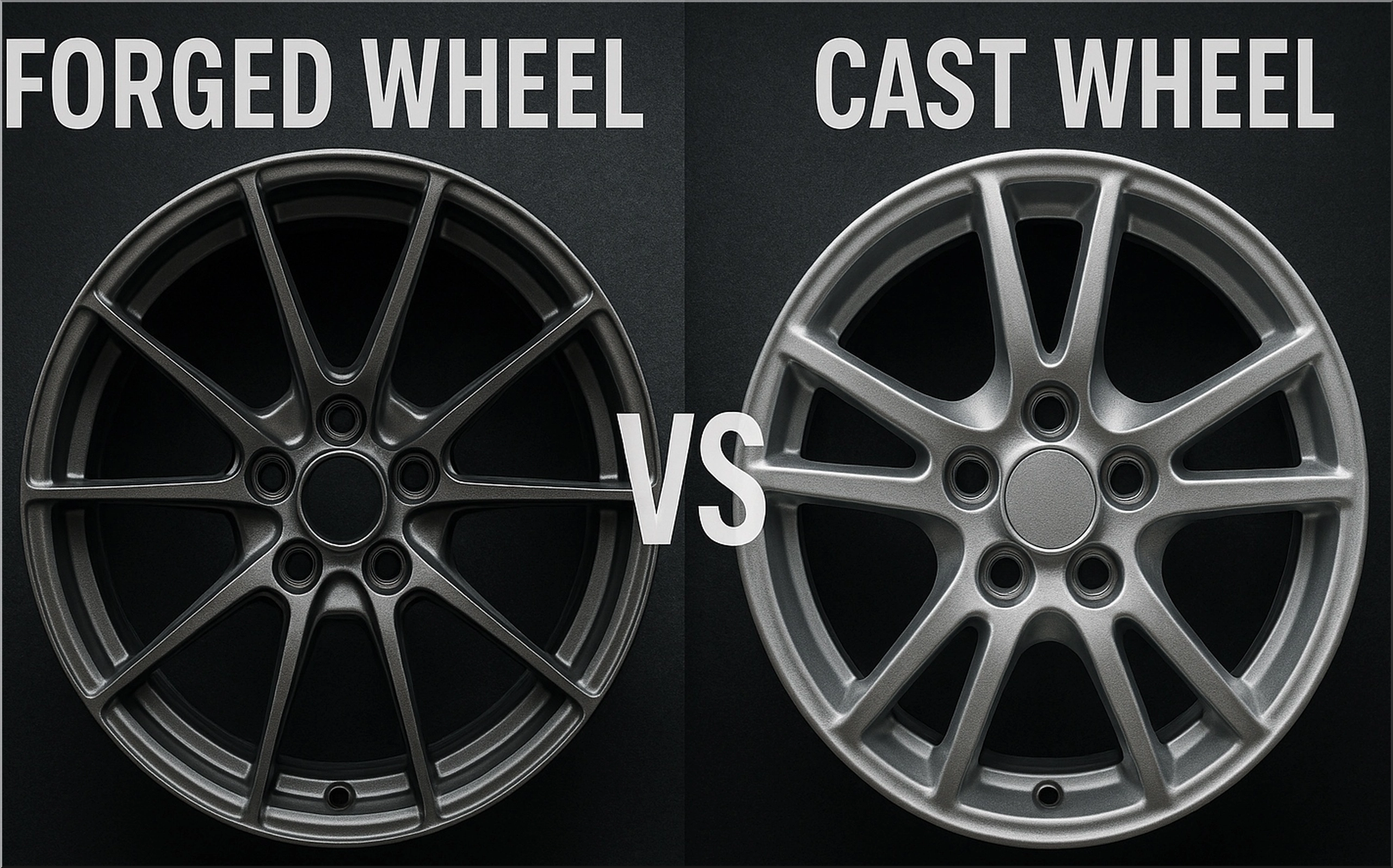
Forged vs Cast Wheels: Understanding the Difference
Forged vs cast wheels is a common question among performance-car enthusiasts. Although both types of wheels can look excellent and perform well, their manufacturing processes are very different. As a result, they can offer different levels of strength, weight, performance, and customization.
Cast wheels are produced by pouring molten aluminium into a mould. In contrast, forged wheels are manufactured from a solid piece of aluminium that is shaped under high pressure. Because of this difference, forged wheels can offer an excellent strength-to-weight ratio for demanding performance applications.
However, choosing between forged and cast wheels depends on your vehicle, driving style, budget, and performance goals. Therefore, understanding the differences can help you make a more informed decision.
Forged vs Cast Wheels: How Are They Made?
The manufacturing process is one of the biggest differences between the two wheel types.
How Cast Wheels Are Made
Cast wheels are manufactured by melting aluminium and pouring it into a wheel-shaped mould. Once the aluminium cools and hardens, the wheel is removed, machined, finished, and inspected.
Because casting is relatively efficient for producing large quantities, cast wheels are generally more affordable. For this reason, they remain a popular choice for everyday vehicles and enthusiasts looking for a cost-effective wheel upgrade.
How Forged Wheels Are Made
Forged wheels start with a solid aluminium billet or forging blank. Instead of simply pouring molten metal into a mould, manufacturers use substantial pressure to shape the material.
As a result, the aluminium develops a strong and consistent structure. Furthermore, manufacturers can precisely engineer the wheel around specific performance requirements.
This makes forged wheels particularly attractive for high-performance European cars, sports cars, and track-focused builds.
Forged vs Cast Wheels: Weight and Performance
Weight is one of the most important considerations when choosing performance wheels.
Generally, a well-designed forged wheel can achieve a lower weight while maintaining excellent strength. Consequently, reducing unsprung and rotational mass can improve several aspects of vehicle performance.
A lighter wheel can contribute to:
- Faster acceleration
- Improved braking response
- Sharper steering
- Better suspension response
- More precise handling
Moreover, reducing unsprung weight allows the suspension to respond more effectively to changes in the road surface.
However, wheel weight depends on many factors, including wheel diameter, width, design, construction, and manufacturer. Therefore, it is important to compare the actual specifications rather than assuming every forged wheel will automatically be lighter than every cast wheel.
Forged vs Cast Wheels: Strength and Durability
Performance drivers often choose forged wheels because of their excellent strength-to-weight characteristics. In particular, forged construction allows manufacturers to engineer wheels for demanding applications while keeping unnecessary material to a minimum.
Nevertheless, cast wheels can also provide excellent durability when properly designed and manufactured. Therefore, the choice should not simply be based on the manufacturing method.
Instead, consider the wheel’s:
- Construction
- Material
- Design
- Weight
- Load rating
- Intended application
- Manufacturer quality
Ultimately, a high-quality wheel from a reputable manufacturer is more important than choosing based on the word “forged” alone.
Forged vs Cast Wheels: Which Looks Better?
When it comes to styling, both forged and cast wheels can completely transform a performance car.
However, forged wheels often provide more opportunities for customisation. Manufacturers can offer different widths, offsets, finishes, spoke designs, and specifications to create a highly personalised setup.
For enthusiasts building a premium European performance car, this level of customisation can be particularly appealing.
At EA Performance Australia, we offer premium forged wheel brands including RYFT Wheels, Brixton Forged, and BC Forged.
RYFT Wheels
RYFT Wheels combines performance-focused engineering with aggressive modern designs. As a result, they are an excellent option for enthusiasts who want their car to stand out while maintaining a performance-focused setup.
Explore the RYFT range:
https://eaperformance.com.au/product-category/ryft/
Brixton Forged
Brixton Forged specialises in premium forged wheels designed for high-end performance and luxury vehicles. Furthermore, the brand offers extensive customisation for enthusiasts looking for a unique wheel setup.
Explore Brixton Forged:
https://eaperformance.com.au/product-category/brixton-forged/
BC Forged
BC Forged offers a wide range of forged wheel designs and specifications for performance-focused builds. Therefore, the brand is a popular choice for enthusiasts who want to combine lightweight construction with personalised styling.
Explore BC Forged:
https://eaperformance.com.au/product-category/bc-forged/
Forged vs Cast Wheels: What About Cost?
Price is one area where cast wheels usually have an advantage.
Generally, cast wheels are less expensive because their manufacturing process is more efficient for producing larger quantities. Meanwhile, forged wheels require more advanced manufacturing processes and machining.
Consequently, forged wheels typically cost more.
However, the higher initial investment can make sense for enthusiasts who prioritise weight reduction, customisation, strength, and premium construction.
In other words, cast wheels can offer excellent value for everyday use, while forged wheels may be more suitable when performance and customisation are higher priorities.
Do Forged Wheels Improve Handling?
They can, particularly when the forged wheels reduce overall unsprung and rotational weight.
For example, reducing wheel weight can help the suspension react more quickly. As a result, the vehicle may feel more responsive during cornering and direction changes.
Additionally, lighter wheels can improve steering feel and braking response.
However, wheel selection should always consider the complete vehicle setup. For instance, tyres, suspension, alignment, wheel width, offset, and vehicle weight all influence handling.
Therefore, the best wheel upgrade is not necessarily the lightest wheel available. Instead, it should be the wheel that provides the right combination of weight, strength, fitment, and design for your vehicle.
Forged vs Cast Wheels: Which Is Better for European Cars?
European performance vehicles can benefit from carefully selected lightweight wheels.
Cars such as the:
- Volkswagen Golf R
- Audi RS3
- BMW M3
- BMW M4
- Mercedes-AMG
- Porsche 911
- Audi RS6
- Lamborghini Huracán
- Ferrari models
can all benefit from a properly engineered wheel and tyre package.
Furthermore, premium wheels can complement other performance modifications such as suspension and exhaust upgrades.
For example, pairing lightweight forged wheels with H&R lowering springs can create a more aggressive stance while improving handling. Meanwhile, Bilstein suspension can provide improved damping and control.
Explore our suspension range:
H&R:
https://eaperformance.com.au/product-category/hr/
Bilstein:
https://eaperformance.com.au/product-category/bilstein/
Don’t Forget Wheel Hardware
Choosing the right wheels is only part of creating a safe and effective setup. In addition, correct wheel hardware is essential for proper installation and fitment.
TNEER offers premium wheel hardware designed for performance applications, including wheel bolts, wheel nuts, spacers, and stud conversion solutions.
Therefore, when upgrading to forged wheels, make sure the complete setup is compatible with your vehicle.
Explore TNEER:
https://eaperformance.com.au/product-category/tneer/
How to Choose Between Forged and Cast Wheels
So, which option should you choose?
If budget is your main priority, high-quality cast wheels can provide excellent value. On the other hand, if you prioritise lightweight construction, premium materials, customisation, and performance, forged wheels are worth considering.
Before purchasing, compare:
- Wheel weight
- Wheel diameter
- Wheel width
- Offset
- PCD
- Load rating
- Brake clearance
- Tyre compatibility
- Intended driving conditions
- Manufacturer reputation
Most importantly, make sure the wheels are correctly specified for your vehicle.
Why Choose EA Performance Australia?
At EA Performance Australia, we understand that performance enthusiasts want more than just good-looking wheels. That’s why we offer premium brands designed for European performance vehicles.
Our range includes:
- RYFT Wheels
- Brixton Forged
- BC Forged
- TNEER
- H&R
- Bilstein
- RacingLine Performance
- IPE Exhaust
- Capristo Exhaust
Furthermore, our range allows you to combine wheels, suspension, exhaust, and other performance upgrades into a complete vehicle build.
Browse the complete EA Performance range:
Final Thoughts
When comparing forged vs cast wheels, there is no single answer that works for every driver. Instead, the right choice depends on your budget, vehicle, driving style, and performance goals.
Cast wheels can provide excellent value and durability for everyday driving. Meanwhile, forged wheels offer an attractive combination of lightweight construction, strength, premium styling, and customisation.
Ultimately, if you’re building a serious European performance car, lightweight forged wheels are worth considering as part of a complete performance package. Combined with quality tyres, suspension, and correct wheel hardware, the right wheel setup can transform the way your vehicle looks and drives.
If you’re ready to upgrade your wheels, explore the forged wheel collections from RYFT Wheels, Brixton Forged, and BC Forged at EA Performance Australia.